Franchise vs. Corporate: Why One-Size-Fits-All Task Management Fails at Scale
Picture two teams inside the same organization. One sits at headquarters, planning a product launch six months out. The other runs a franchise location that opens at 7 a.m., serves a lunch rush, and closes at 10 p.m. — every single day. Now imagine handing both teams the exact same task management setup and expecting it to work equally well.
It won't. And yet this is precisely what happens when a growing company picks one rigid system and rolls it out top-down across every location, department, and franchise.
The instinct is understandable. Standardization feels like control. But at scale, forcing every team into an identical workflow doesn't create consistency — it creates friction. In this article, we'll break down why one-size-fits-all task management breaks down as organizations grow, and what a smarter model looks like.
The Franchise vs. Corporate Divide
Corporate and franchise teams don't just do different work — they operate on fundamentally different rhythms.
Corporate teams think in quarters. Their work is project-based, cross-functional, and often abstract: strategy documents, campaign planning, product roadmaps. Deadlines stretch over weeks or months, and success is measured in outcomes.
Franchise and frontline teams think in shifts. Their work is operational and repeatable: opening checklists, inventory counts, compliance sign-offs, guest complaints resolved before end of day. Success is measured in whether today ran smoothly — and whether tomorrow will too.
When you impose a corporate project-management structure on a franchise, you get teams drowning in features they'll never use. When you impose a lightweight checklist tool on corporate, you get strategic initiatives with no visibility or accountability. Neither side wins.
Why "One System for Everyone" Fails at Scale
The problems don't show up on day one. They surface as you grow — and by then they're expensive to fix.
Adoption collapses at the edges. Frontline teams abandon tools that feel built for someone else's job. A study by Gartner found that a large share of employees resist tools that don't fit their actual workflow — and when adoption drops, so does data quality.
Headquarters loses visibility. When each location quietly reverts to spreadsheets, WhatsApp groups, or paper, leadership loses the single source of truth it standardized to gain in the first place.
Local context gets flattened. A franchise in Bangkok and one in Berlin face different regulations, languages, and customer expectations. A rigid global template can't flex to either.
Change becomes glacial. With one monolithic setup, every adjustment has to be negotiated across the whole org. Teams stop requesting improvements because nothing ever changes fast enough.
The result is the worst of both worlds — a system too heavy for the frontline and too rigid for headquarters.
The Fix: Standardize the Framework, Localize the Work The answer isn't to abandon standardization. It's to standardize the right layer.
Think of it as a headquarters-and-business-unit model. HQ sets the framework — the standards, the reporting structure, the non-negotiables. Each business unit or franchise then operates within that framework using workflows shaped to their reality.
- Standardize what must be consistent: brand standards, compliance requirements, reporting formats, and the metrics leadership needs to see across every location.
- Localize what must be flexible: daily workflows, task templates, shift structures, and the level of detail each team actually needs to get through their day.
This way, a franchise team gets a clean, repeatable opening checklist — while headquarters still sees real-time roll-up data across all locations. Both teams work the way that suits them, and the organization keeps one coherent picture.
How Taskworld Supports Both Worlds
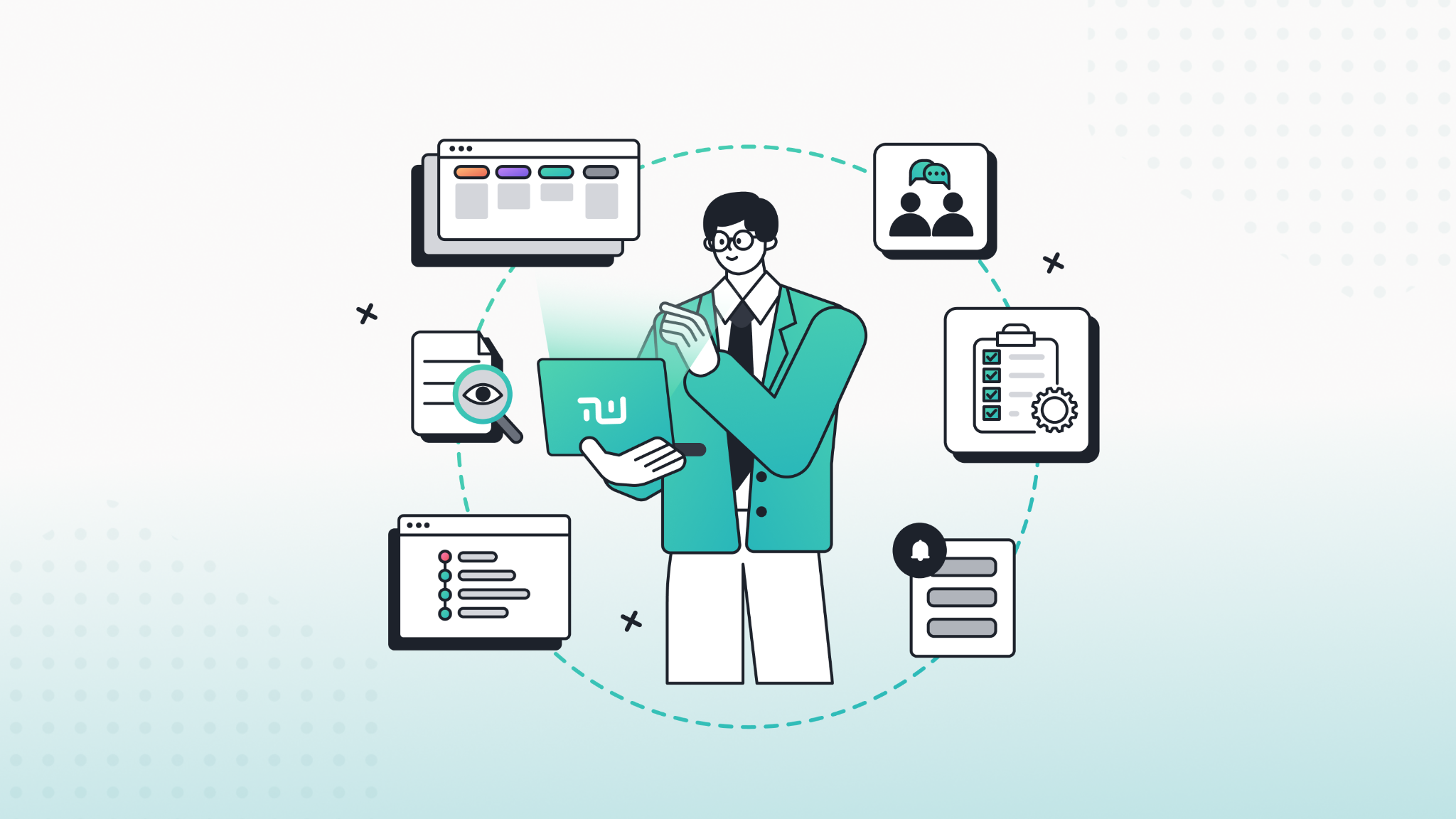
This is exactly the challenge Taskworld's HQ + SBU model is built for. Headquarters can define reusable templates and milestone plans that roll out consistently to every location, while each team adapts the day-to-day tasks to their own operations.
Franchise and frontline teams get simple, repeatable workflows with task designation and real-time updates, so nothing slips through a shift change. Meanwhile, leadership keeps centralized visibility and analytics across every unit — the consistency of a standard, without forcing every team into the same box.
We've seen this play out with enterprise customers managing dozens of locations: the ones who thrive don't pick corporate or franchise workflows. They build a structure that serves both.
Manage Every Team the Way They Actually Work
Taskworld gives headquarters the standardization it needs and gives every franchise the flexibility to run their day — all on one platform.